

There are two basic stud welding processes, tip ignition and drawn arc welding, each with several variants. Here you can find out how they differ, which process suits your application and which are suitable for automation. You can read about which materials can be welded on our page on materials.
In short
Tip ignition with the contact and gap methods is suitable for thin sheet and smaller studs. Drawn arc welding with the short-cycle process, ceramic ferrule or shielding gas is intended for larger studs and thicker components. The gap method and the short-cycle process are particularly suitable for automation.
On this page
- What stud welding processes are there?
- Which process suits my application?
- What is the difference between the contact and gap methods?
- When do you use short-cycle, ceramic ferrule or shielding gas?
- How do the processes differ in detail?
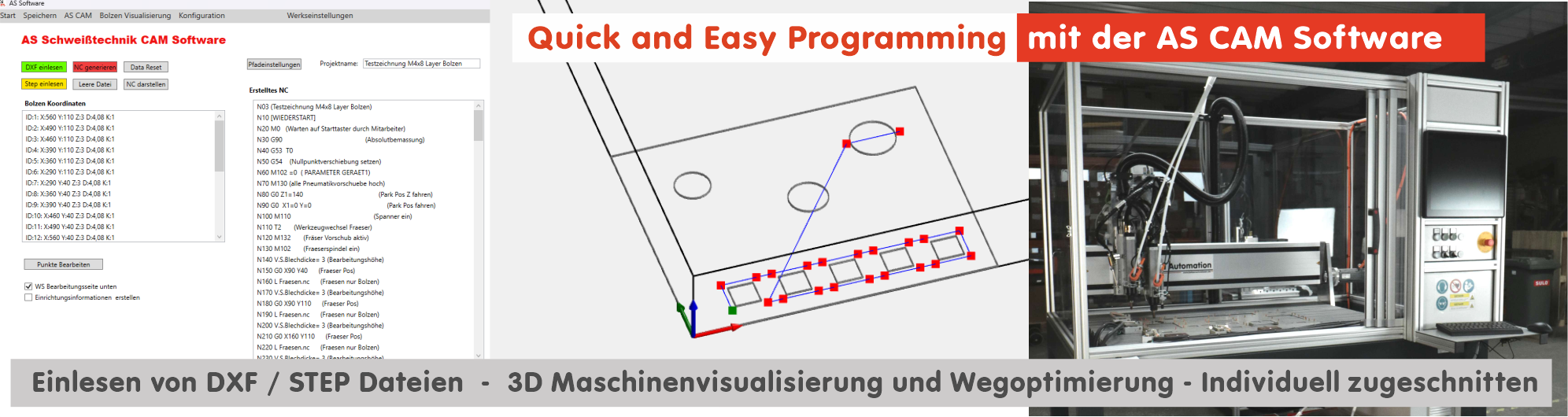
- Which processes are suitable for automation?
- How do I set the right welding parameters?
- In which sectors is stud welding used?
- How efficient is stud welding?
What stud welding processes are there?
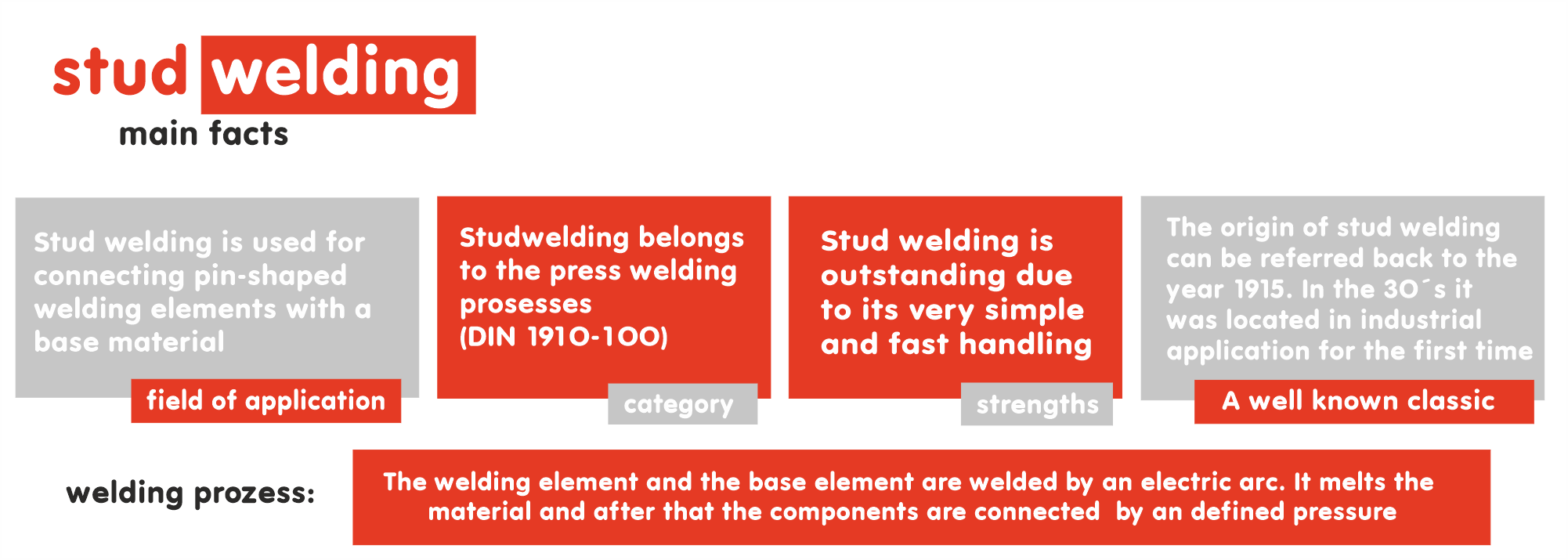
Stud welding is basically divided into two process groups: tip ignition and drawn arc welding. The fundamental difference is that in tip ignition the arc forms via the ignition tip of the stud with a much higher welding current and in a very short time. In drawn arc welding, the stud is lifted to arc length under a pilot arc and plunges into the molten pool after the welding time.
Tip ignition is divided into the contact method and the gap method, drawn arc welding into the short-cycle process, drawn arc welding with ceramic ferrule and drawn arc welding with shielding gas. You can find an overview of all variants in the comparison table below.
For thin sheet and smaller studs up to 8 mm. With the contact and gap methods, and the units run on a standard 230 V socket.
For larger studs and thicker components. With the short-cycle process, ceramic ferrule or shielding gas.
Which process suits my application?
This depends mainly on the stud diameter, sheet thickness and material. As a rule of thumb: thin sheet, small studs and a visible side speak for tip ignition, large studs and high loads for drawn arc welding. For a reliable choice, we will be happy to advise you personally. Please have the stud diameter, stud and base material, sheet thickness, quantity and accessibility ready.
What is the difference between the contact and gap methods?
Both are variants of tip ignition. In the contact method, the stud rests on the sheet with its ignition tip before welding; in the gap method, it is held at a small distance and only placed on the sheet during welding. The gap method is particularly suitable for aluminium and brass.
When do you use short-cycle, ceramic ferrule or shielding gas?
All three are variants of drawn arc welding and differ in how the molten pool is protected:
- Short-cycle: very short welding time, ideal for thin automotive sheet, curved surfaces and automation
- Ceramic ferrule: protects the molten pool and forms the weld collar, standard for larger studs from 6 mm, for example in steel and plant construction
- Shielding gas: protects the molten pool from the air, important for aluminium, for example, at Arnhold for studs up to 12 mm
How do the processes differ in detail?
The following table shows the most important parameters of all five process variants in comparison.
| Category | Contact method | Gap method | Short-cycle | Ceramic ferrule | Shielding gas |
|---|---|---|---|---|---|
| Welding time Tw (ms) |
1-4 | 1-2 | <100 | >100 | >100 |
| Stud diameter d (mm) |
Ø 1-8 Ø 10 possible to a limited extent |
1-8 | 3-10 | 3-25 | 3-16 |
| Current I (A) |
Up to 10,000 | Up to 10,000 | Up to 1600 | 300-3000 | 300-3000 |
| Weld pool protection | - | - | - | Ceramic ferrule | Shielding gas |
| Min. sheet thickness (mm) |
0.5 | 0.5 | 1/8 d (stud), but min. 0.6 mm | 1/4 d (stud), but min. 1 mm | 1/8 d (stud), but min. 1 mm |
| Weldable materials | St, VA, MS, AL (and others) |
St, VA, MS, (AL) (and others) |
St, VA, MS, AL (and others) |
St, VA, 1.4571, etc. + heat-resistant | St, VA, 1.4571, etc. + heat-resistant |
| Lower-cost studs | yes | yes | yes | no | no |
| Lower-cost units | yes | yes | no | no | no |
| Suitable for automation (more under Automation) |
no | yes | yes | no | yes (depending on stud size) |
| 230 V standard socket | yes | yes | no | no | no |
| Values may vary depending on unit and application | |||||
Which processes are suitable for automation?
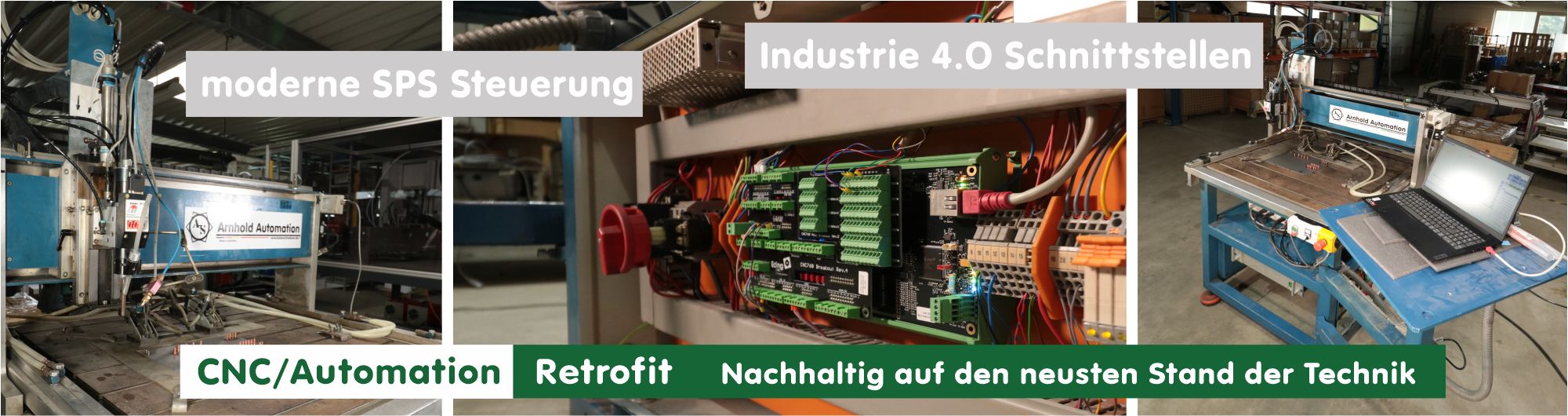
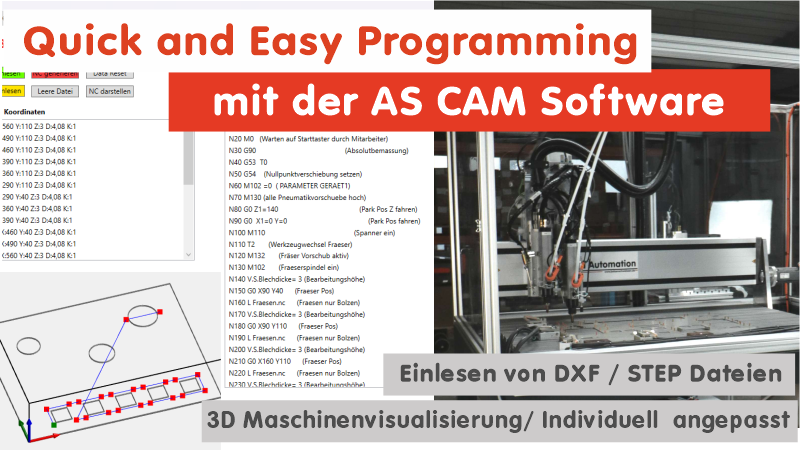
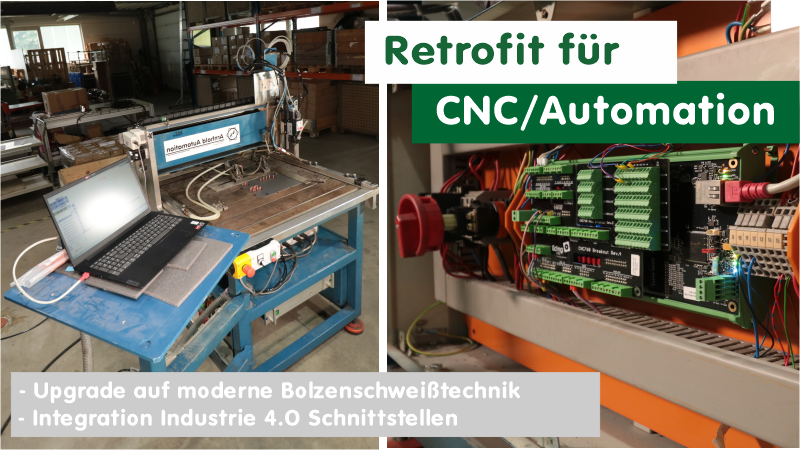
The gap method and the short-cycle process are easy to automate. Drawn arc welding with shielding gas can also be automated, depending on the stud size. The contact method and drawn arc welding with ceramic ferrule, on the other hand, are mostly used manually. What automation can look like, from the automatic welding gun to the CNC system, is shown on our automation page.
How do I set the right welding parameters?
The parameters depend on the stud diameter, material and sheet thickness. Arnhold units have 16 parameter memories in which proven settings can be stored. Always carry out a few test welds before series production and check them, for example with a bend test. Find out more on our page on strength.
In which sectors is stud welding used?
| Sector | Examples |
|---|---|
| Industrial applications | Plastering trowels, metal goods, hinges, assembly parts |
| Construction | Façade construction, steel construction, bridge construction, composite construction |
| Vehicle construction | Agricultural machinery, semi-trailers, cars, commercial vehicles, construction vehicles, mobile cranes |
| Electrical industry | Household appliances, control cabinets, front panels, control panels in lifts |
| Plant engineering | Coil heat exchangers, processors, generators, fans |
| Vessel construction | Boilers |
| Shipbuilding | Interior fittings, cable routing |
| Power plant technology | Turbines |
| Insulation | Air ducts, flue gas pipes, production of spray electrodes, industrial insulation, refractory combustion chambers |
| Wear protection | Excavators |
How efficient is stud welding?
With AS stud welders, you get welding units that already work with a minimum of energy. Because the energy is only applied for a fraction of a second, stud welding needs only a fraction of the energy compared with other welding processes (electrode, MAG, TIG). The base material is also subjected to much less thermal stress. Commission Regulation (EU) 2019/1784 of 1 October 2019 laying down ecodesign requirements for welding equipment pursuant to Directive 2009/125/EC of the European Parliament and of the Council therefore does not apply to stud welders, in accordance with Article 1(3) of the Regulation.
Not sure which process suits your component?
We will be happy to advise you personally, by phone on +49 2302 95640-0 or by message.
More topics
What is stud welding and how does it work?
Stainless steel, aluminium, galvanised sheet and more.
Load capacity, testing and standards.
Stud welding, riveting or screwing?
