

The gap method is a variant of tip ignition. The stud is held at a small distance from the workpiece and only placed on it during welding. Here you can find out how the process works and what it is suitable for.
In short
In the gap method, a magnetic coil holds the stud at a small distance above the workpiece. When welding is triggered, the coil is released, a spring accelerates the stud and a short arc forms on impact. Thanks to the shorter welding time, the method is suitable for steel, stainless steel and aluminium sheet, and thanks to the lower joining force it is usually preferred in automation.
On this page
How does the gap method work?
In stud welding with a gap, the stud is preloaded against a spring with the help of a magnetic coil. This creates a gap between the stud and the workpiece, which is defined by spacers on the welding gun.
When the operator triggers the welding process, the magnetic coil is released and the stud, accelerated by the spring, moves towards the workpiece.
As soon as electrical contact is made, an arc forms during the forward movement of the stud, which is ended by the impact of the stud.
What is the timing of a weld?
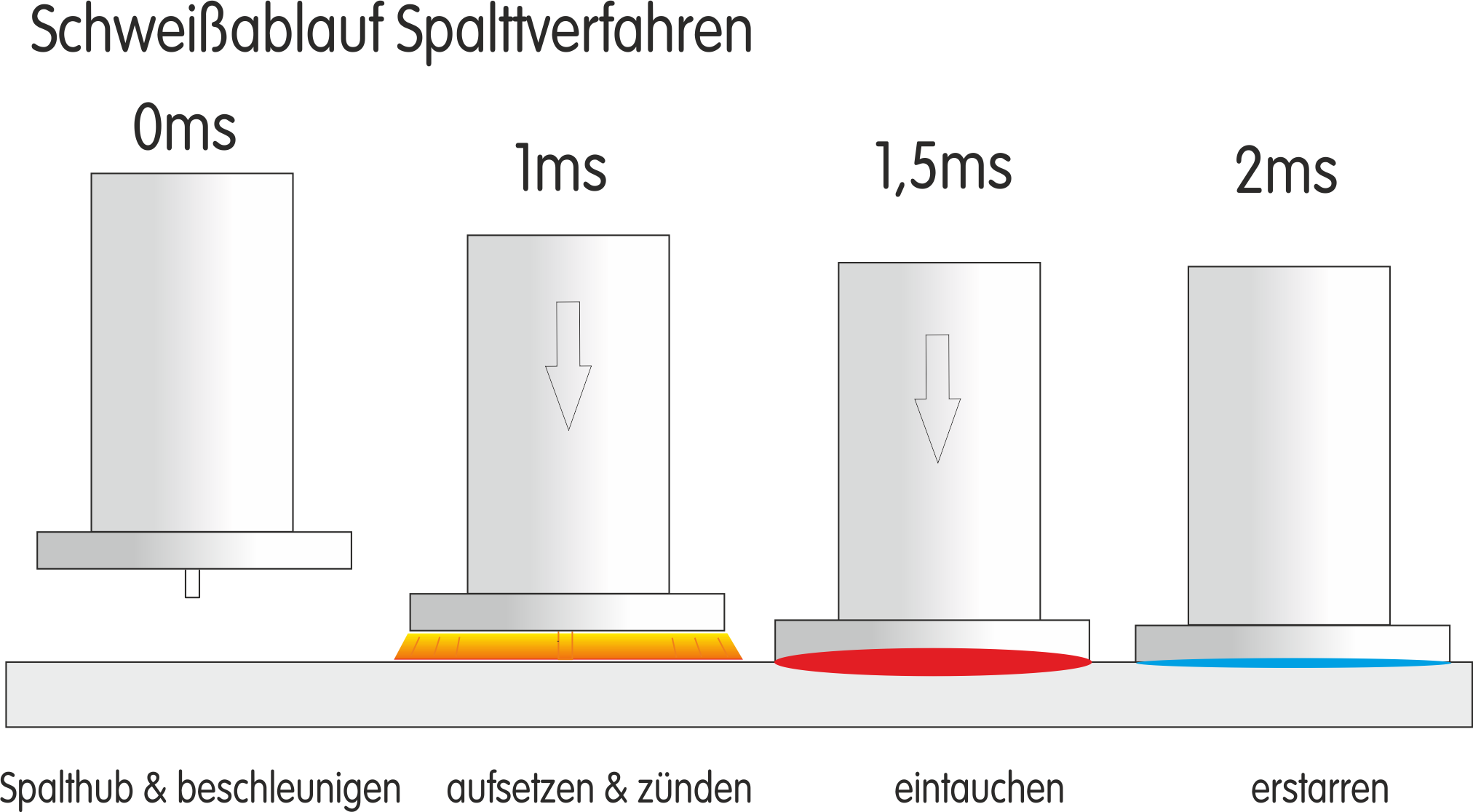
The graphic above shows the typical sequence in four steps:
- 0 ms, gap lift and acceleration: The magnetic coil releases the stud and the spring accelerates it towards the workpiece.
- 1 ms, placing and ignition: The arc ignites on contact with the workpiece.
- 1.5 ms, plunging: The stud plunges into the molten pool.
- 2 ms, solidification: The molten pool solidifies and the joint is complete.
Which materials is the gap method suitable for?
Suitable materials are steel, stainless steel and aluminium. Thanks to the shorter welding time, the gap method is suitable for steel and stainless steel as well as for aluminium sheet.
Why is the gap method usually used in automation?
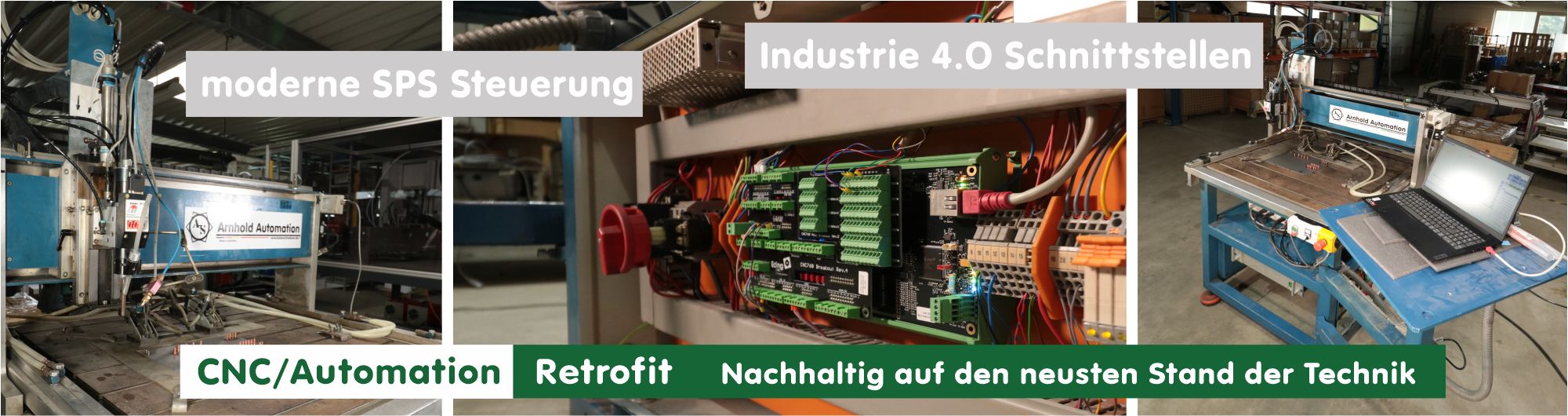
Because of the lower joining force, the gap method is usually used in automated applications. What such solutions look like, from the automatic welding gun to the CNC system, is shown on our automation page.
How does it differ from the contact method?
In the gap method, the stud is held at a small distance and only placed on the sheet during welding. In the contact method, it already rests on the sheet with its ignition tip before welding. The contact method works with a higher joining force and longer welding time and is particularly suitable for steel, stainless steel and galvanised sheet.
What technical data apply?
| Parameter | Value |
|---|---|
| Stud diameter d (mm) | 0.8 to 8 (aluminium up to 6) |
| Welding time approx. (ms) | 0.5-2 |
| Spring force approx. (N) | 40-60 |
| Impact speed approx. (m/s) | 0.5-1 (aluminium 1-1.5) |
| Min. workpiece thickness (mm) | 0.5 |
You can find all parameters compared with the contact method on the tip ignition page. Values may vary depending on unit and application.
Would you like to know whether the gap method suits your component?
We will be happy to advise you personally, by phone on +49 2302 95640-0 or by message.
More topics
Strengths, applications and key data at a glance.
Stud rests on the workpiece before welding, ideal for steel.
Tip ignition or drawn arc? All processes at a glance.
Stainless steel, aluminium, galvanised sheet and more.
