

Arc blow is the one-sided formation of a weld collar on a stud. To achieve a load-bearing weld structure, arc blow should always be avoided. Here you will find the most common causes and how to avoid them.
In short
Arc blow shows up as a one-sided weld collar on the stud. It is encouraged by long welding times and large studs and is caused, for example, by magnetic fields, air flows, uneven mass distribution or gravity. In most cases, it can be avoided with the right earth connection and cable routing.
On this page
- What is arc blow?
- What types of arc blow are there?
- Arc blow caused by external magnetic fields and stray currents
- Arc blow caused by air and gas flows
- Arc blow on round components
- Mass distribution of magnetisable materials
- Arc blow caused by the magnetic field of the welding current
- Arc blow caused by gravity
- How do you learn to avoid arc blow?
What is arc blow?
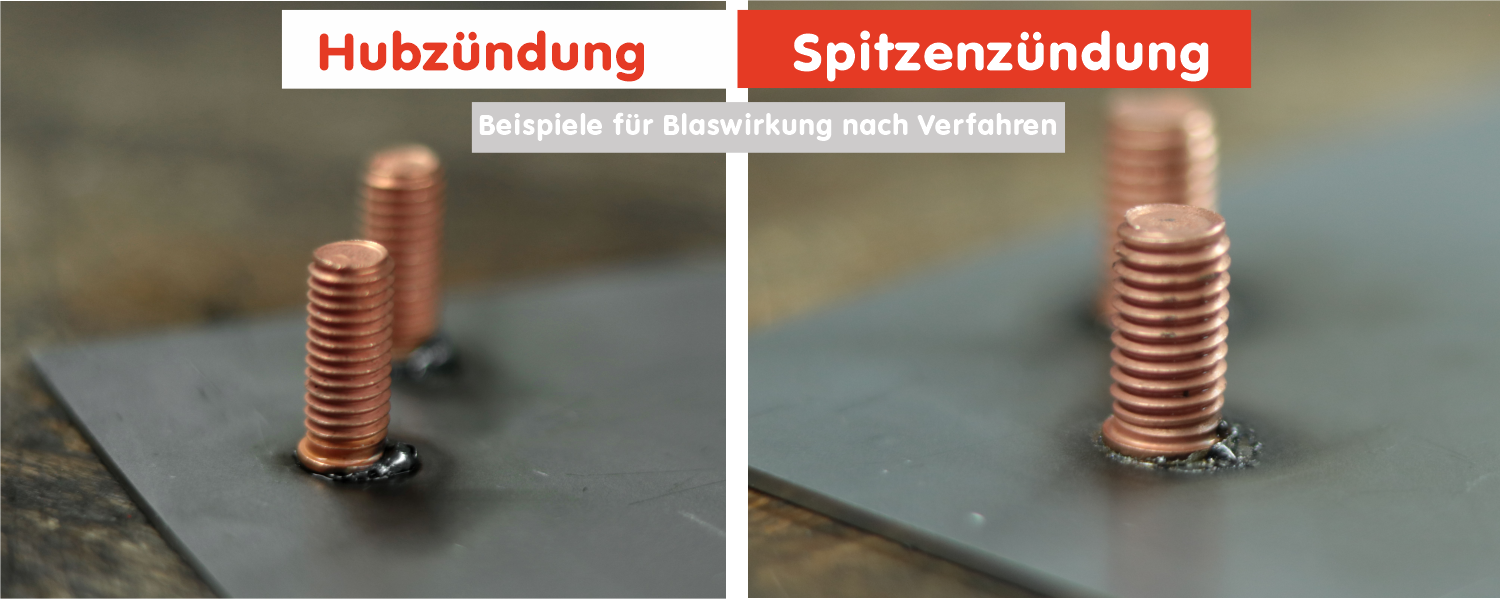
Arc blow is the one-sided formation of a weld collar on a stud. It is encouraged by long welding times and large studs and is caused by various factors. The photo above shows typical examples in drawn arc welding and tip ignition.
What types of arc blow are there?
Below you will find the most common types of arc blow and how they can generally be avoided. This overview is only intended as a rough guide to avoid serious welding errors and is no substitute for stud welding training.
Arc blow caused by external magnetic fields and stray currents
Arc blow can be caused by external currents or magnetic fields, such as those generated by the welding cable of a gun. With the gun, arc blow occurs on the side opposite the cable. It is avoided by suitable cable routing: the power cables are routed so that they compensate for possible arc blow.
Example: route the gun cable where there is an excess of material mass (see mass distribution of magnetisable materials).
Arc blow caused by air and gas flows
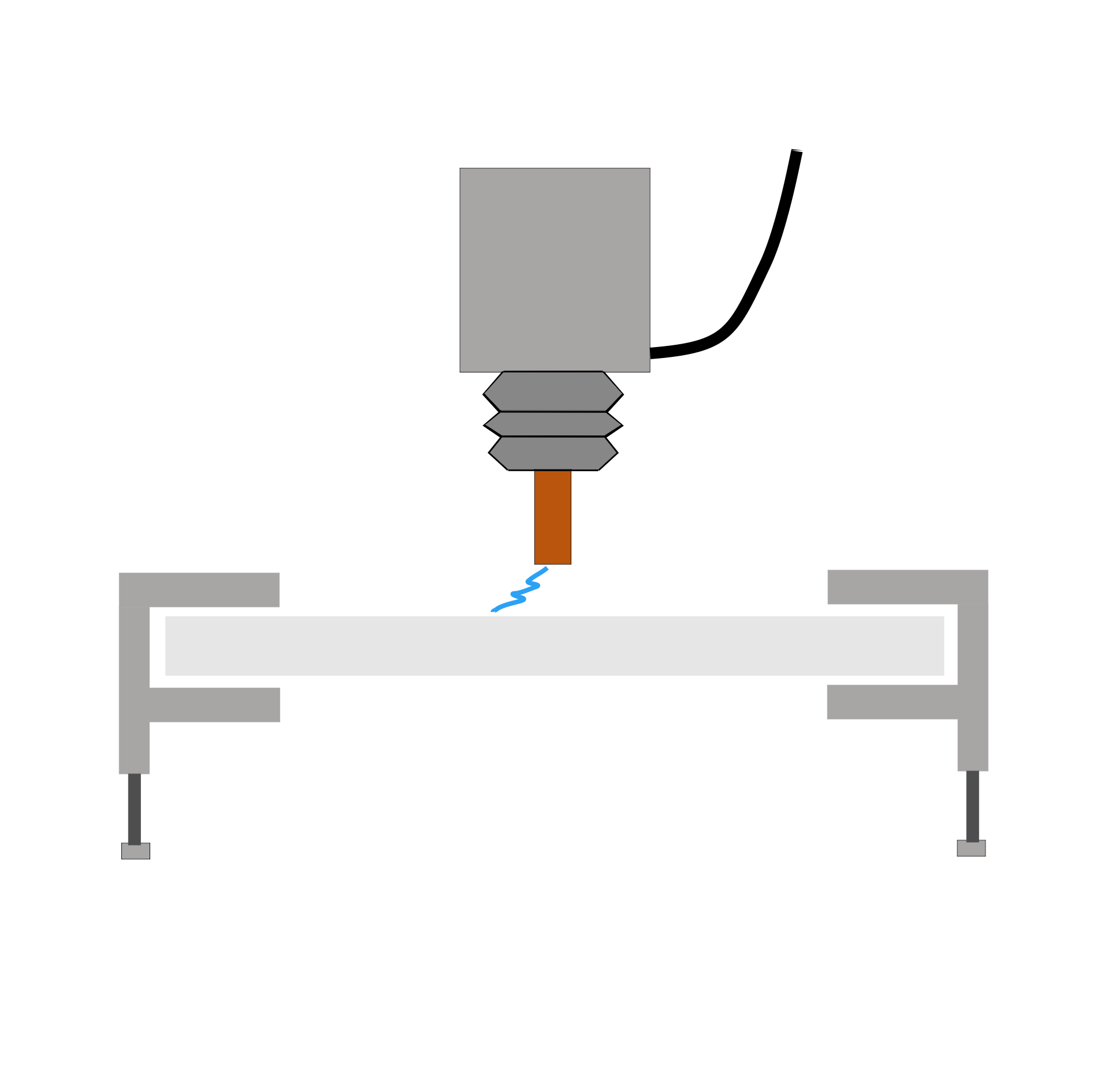
Wind or shielding gas flows can cause arc blow in the direction of the flow (2). With extreme flows, the arc can even be blown out (1). Shielding against wind and the use of a suitable shielding gas device, such as the AS 2901 or AS 2902, are absolutely essential here.
Arc blow on round components
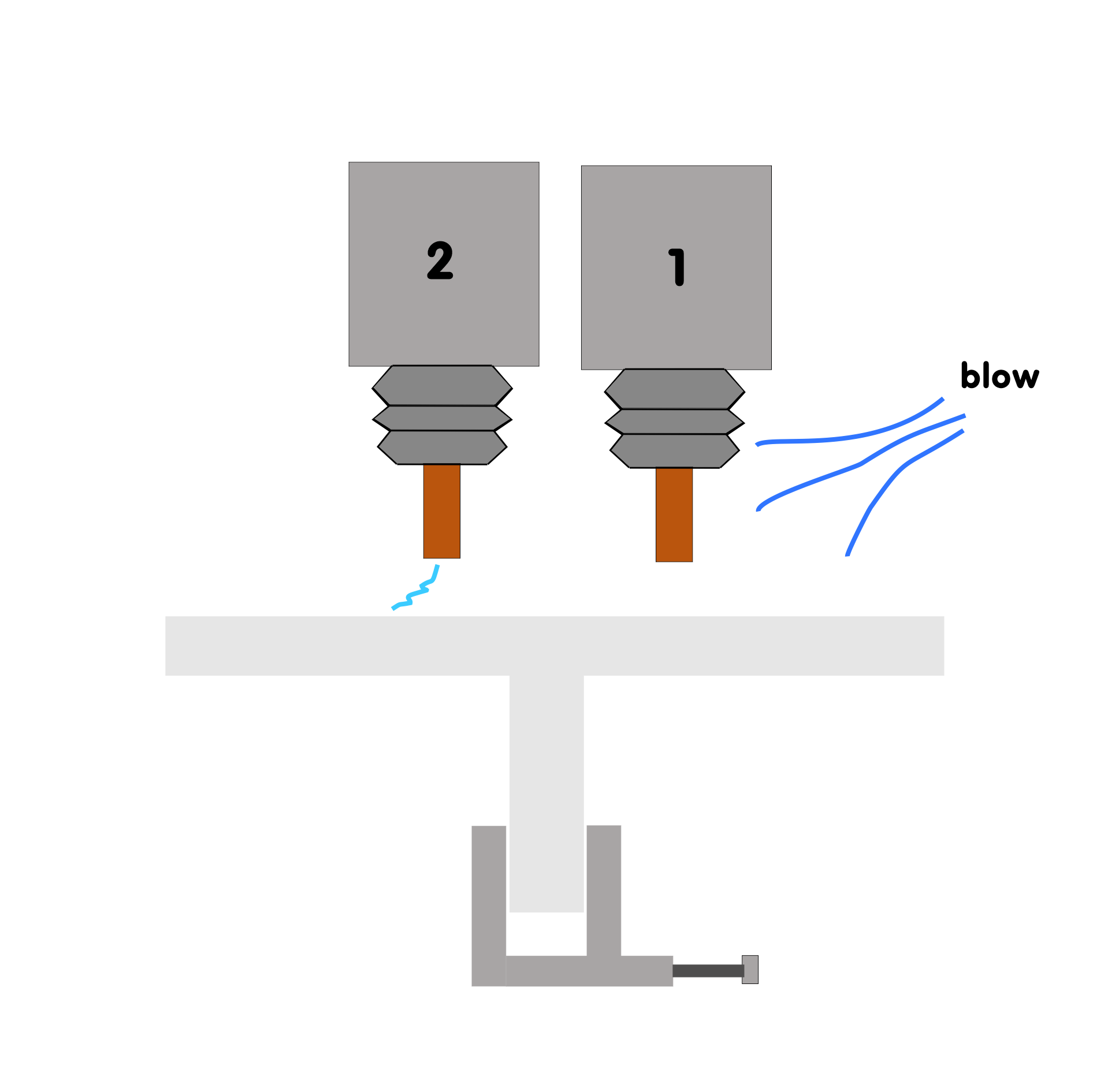
There is also a risk of arc blow at round component edges. We will be happy to advise you on solutions, drawing on knowledge of arc blow built up over decades.
Mass distribution of magnetisable materials
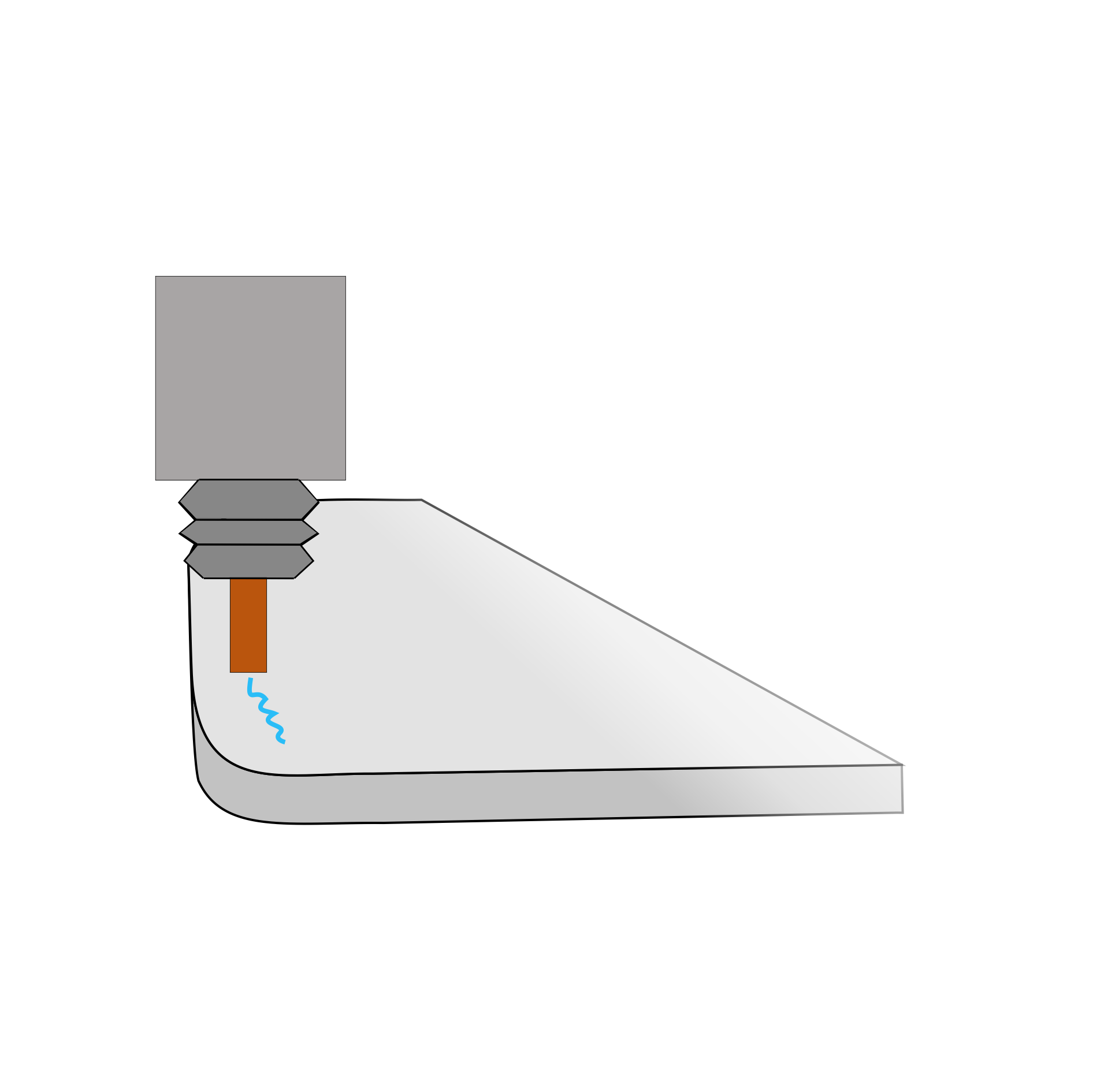
If magnetisable materials are distributed unevenly in the weld area, arc blow occurs in the direction of the excess mass. This effect can be avoided with the concept of a compensating mass: material imbalances are compensated for by an earth connection on the opposite side. Likewise, arc blow caused by a one-sided mass can be compensated for by magnetic material on the other side.
Occurrence:
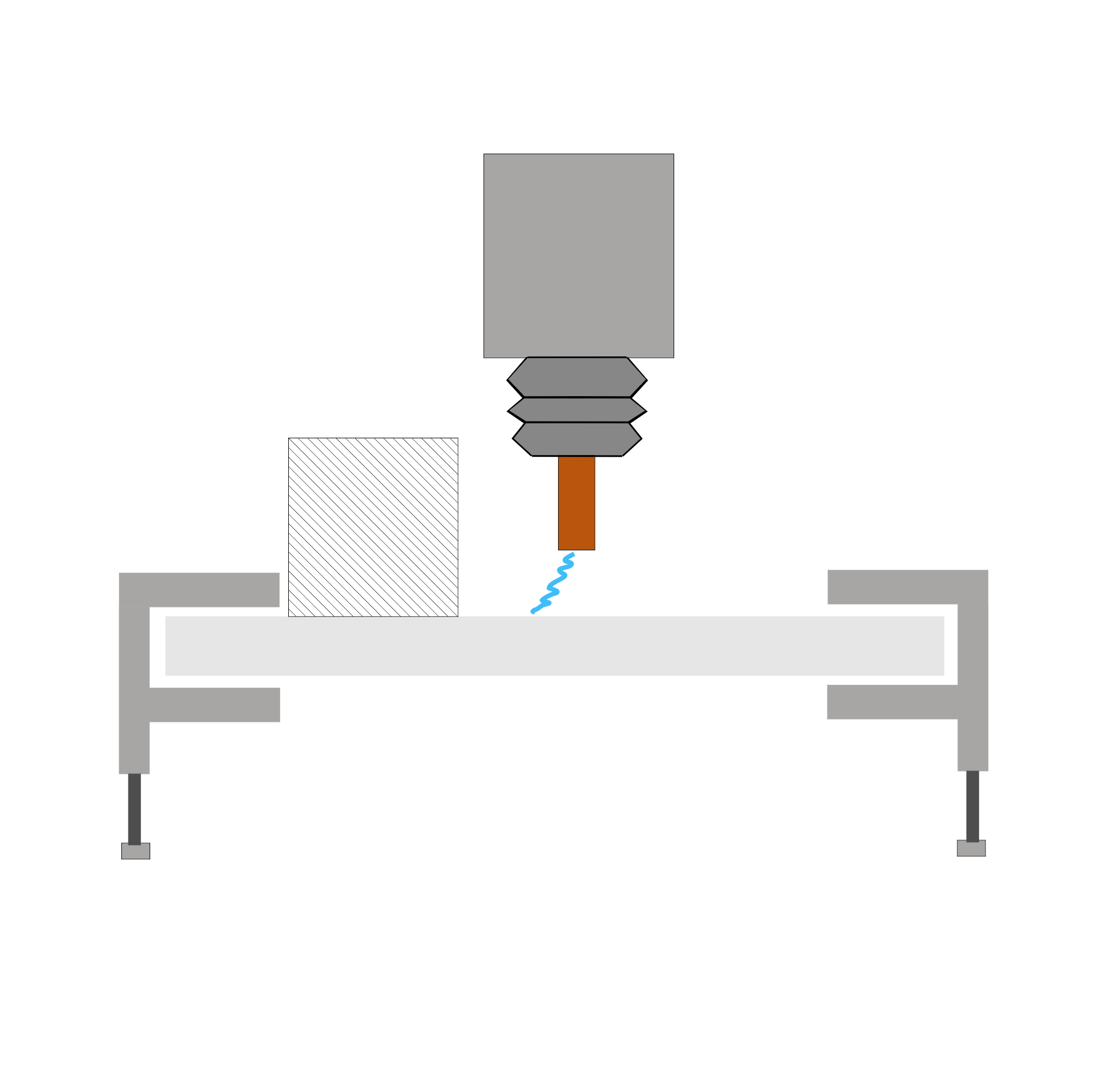
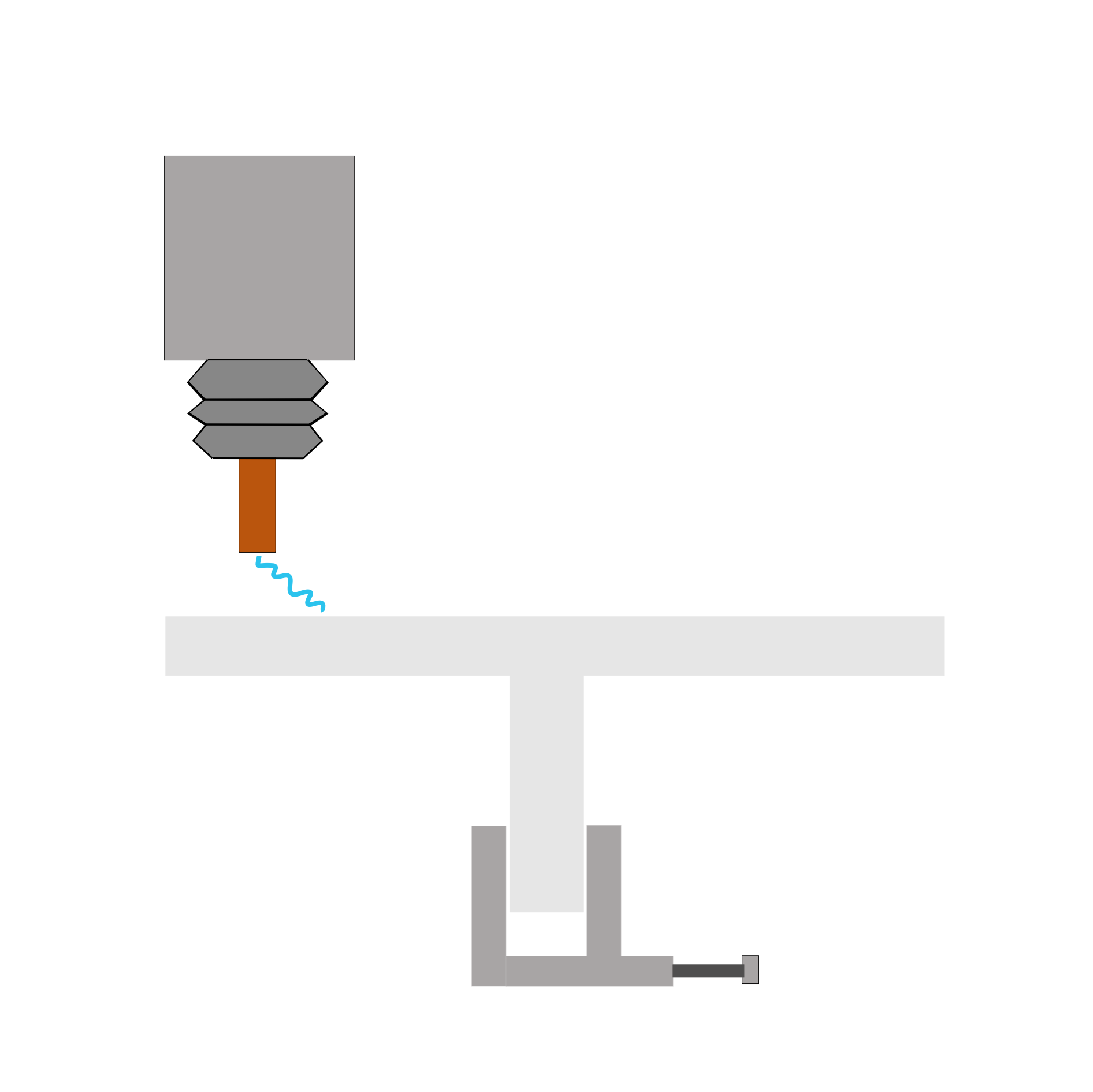
Solution:
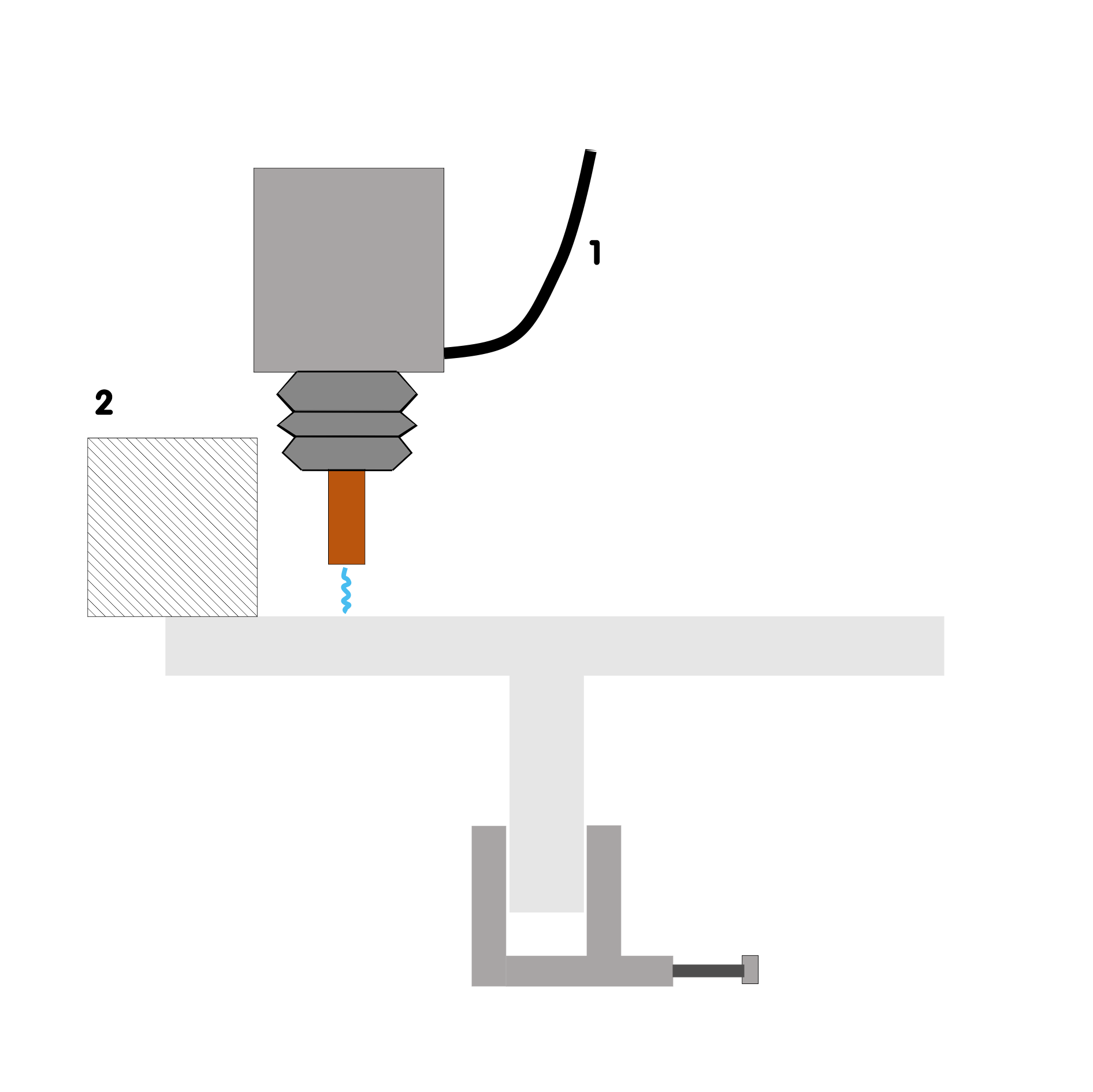
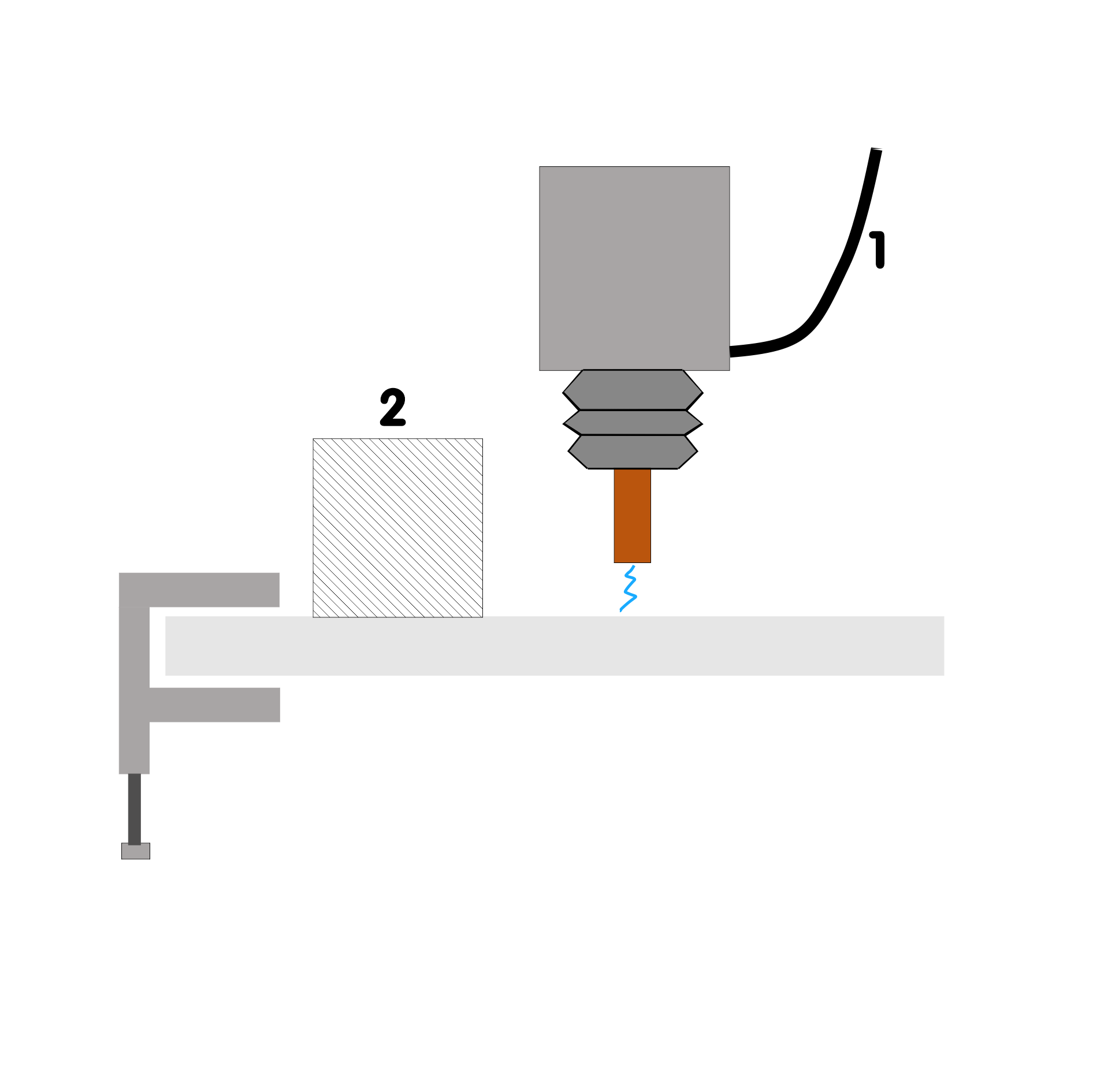
- Cable routing on the side opposite the excess material
- Compensating mass on the side opposite the arc blow
Arc blow caused by the magnetic field of the welding current
With uneven mass distribution, the magnetic field of the welding current causes arc blow on the opposite side. This effect is avoided by using an earth connection on both sides. In most cases, this prevents arc blow.
Occurrence:
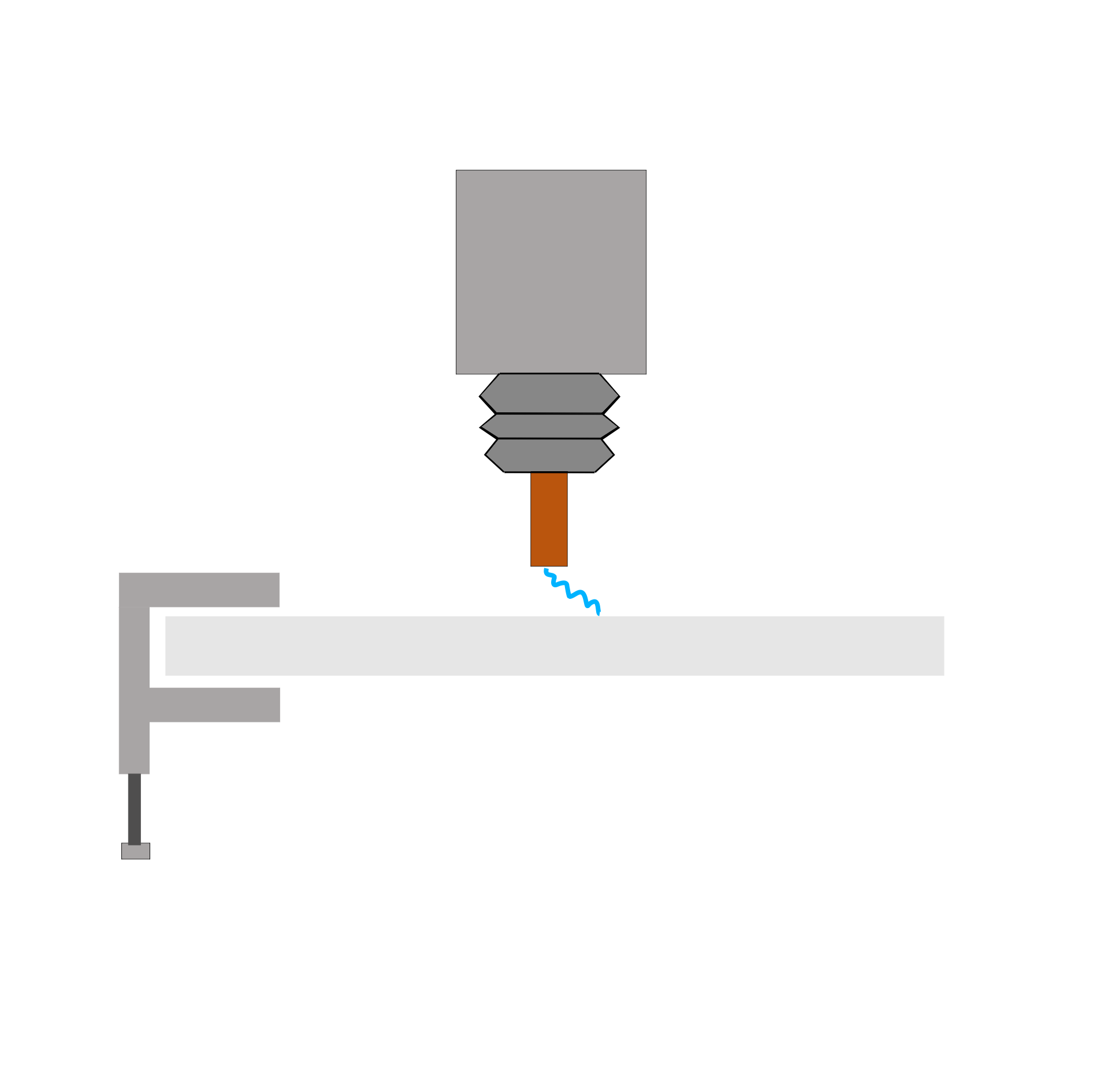
Solution:
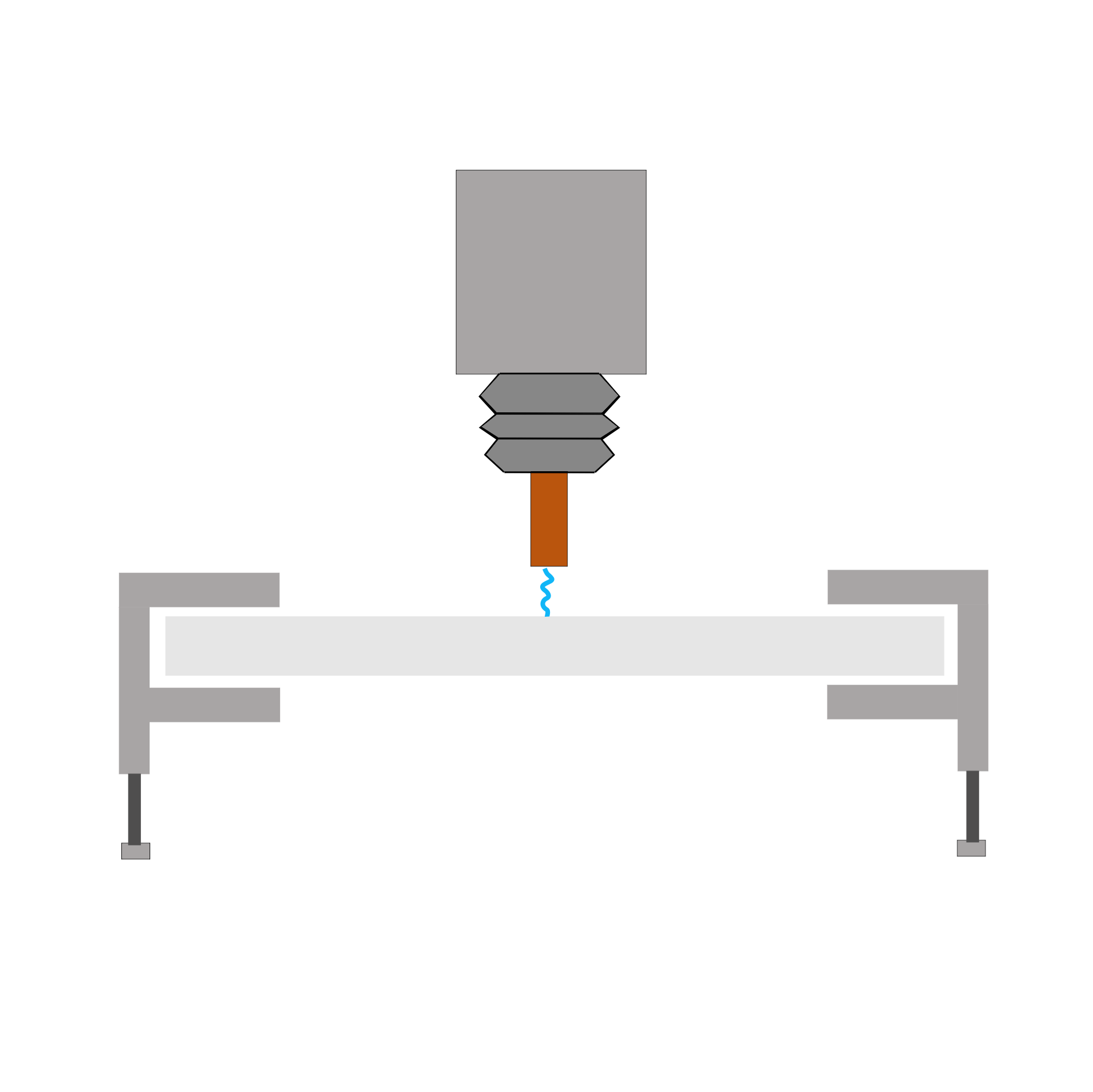
Arc blow caused by gravity
When welding large studs with long welding times on vertical workpieces, gravity can cause arc blow towards the bottom.
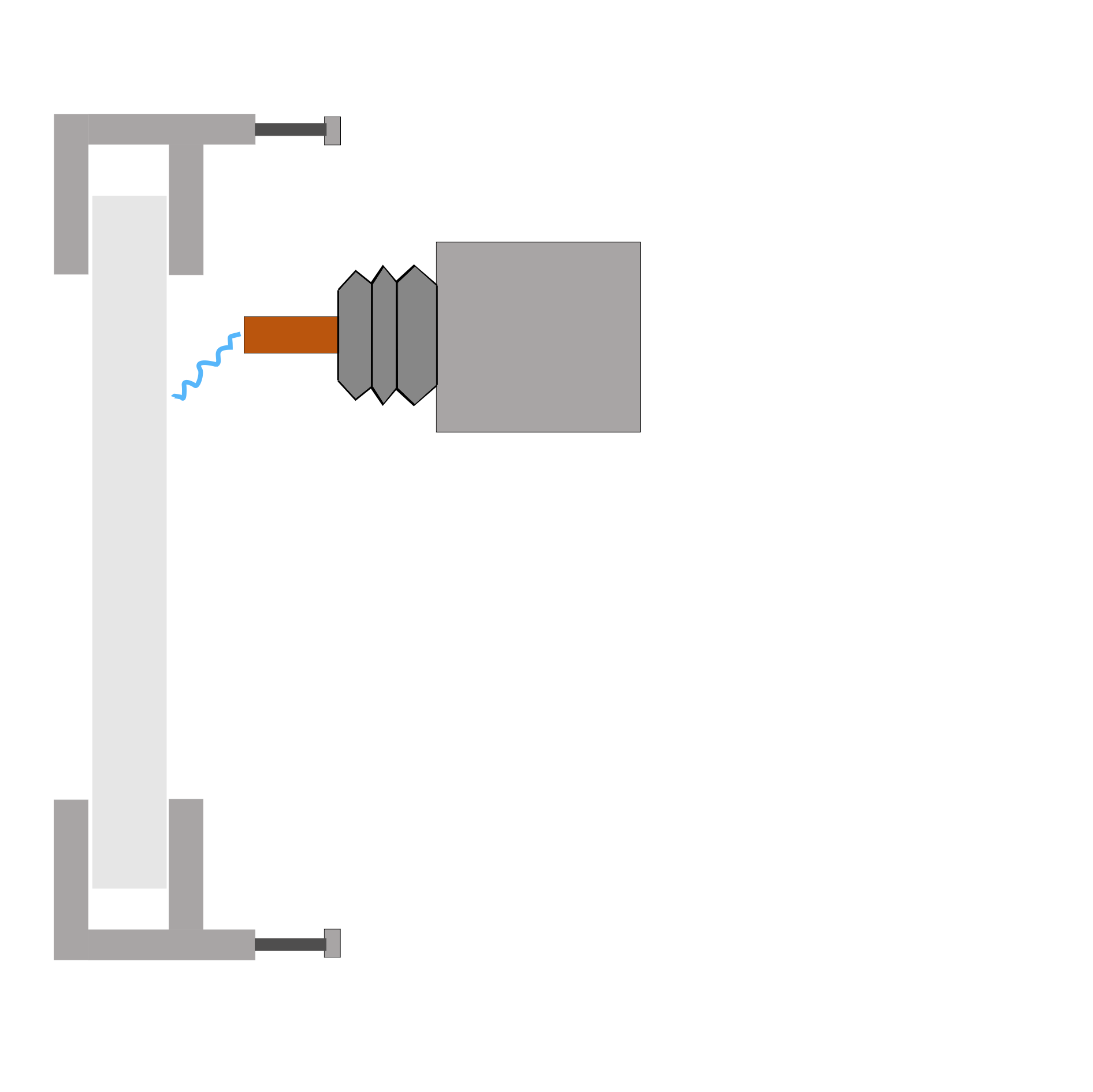
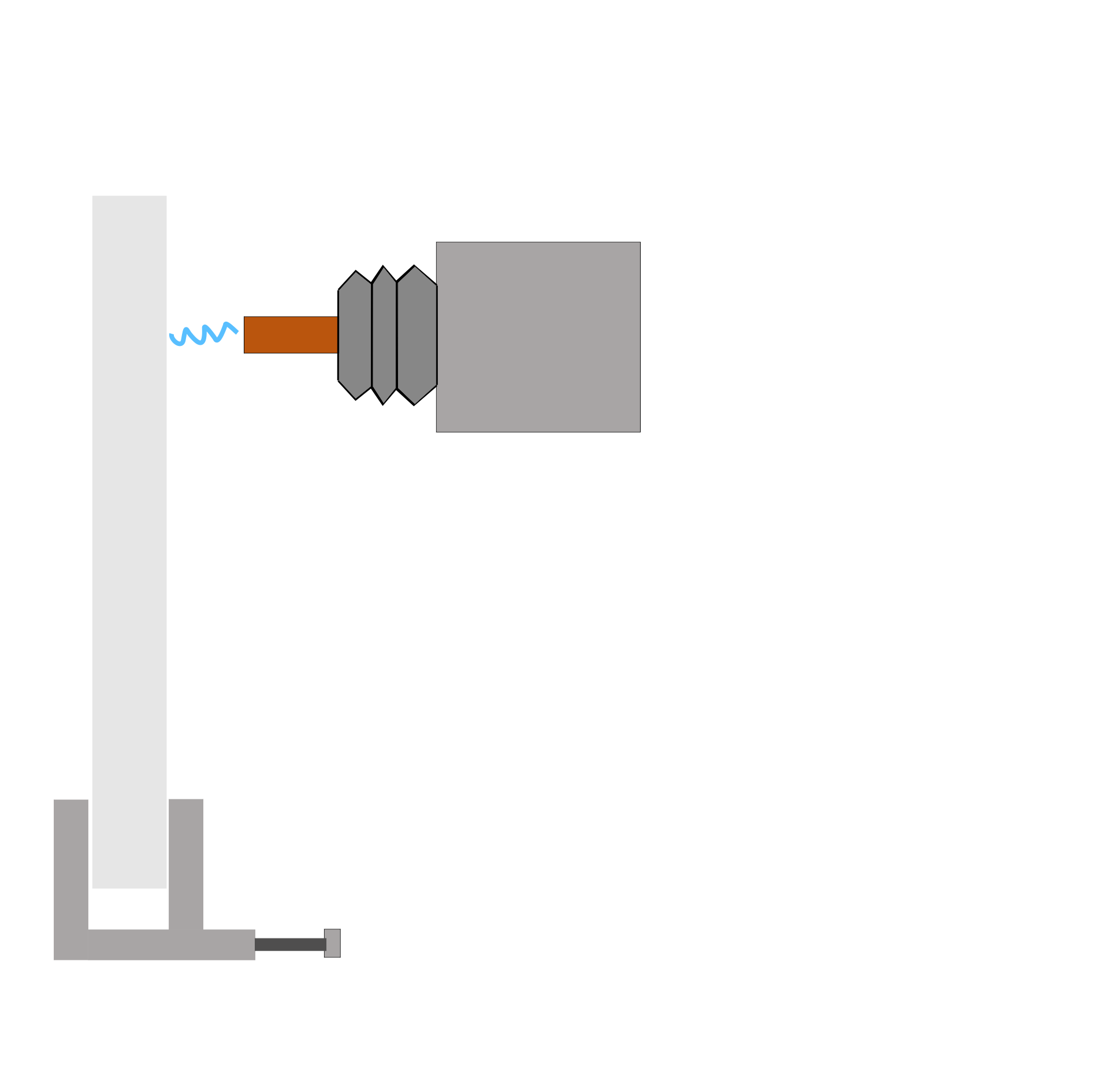
Tip: Use the arc blow of a one-sided earth connection to compensate for arc blow caused by gravity.
How do you learn to avoid arc blow?
On request, we offer training courses on stud welding and our products, in which we go into the subject in more depth. In a training course on arc blow, we show you directly on your workpiece how best to avoid arc blow. This way you learn in practice how to achieve very good welding results for your application.
In addition, all our stud welding technology, especially our automation systems and automation components, is designed to avoid arc blow, based on many years of experience and practical testing.
Are you having problems with arc blow on your component?
We will be happy to advise you personally, by phone on +49 2302 95640-0 or by message.
More topics
Load capacity, testing and standards.
For very high-quality, visually appealing welds.
For large studs and longer welding times.
Tip ignition or drawn arc? All processes at a glance.
